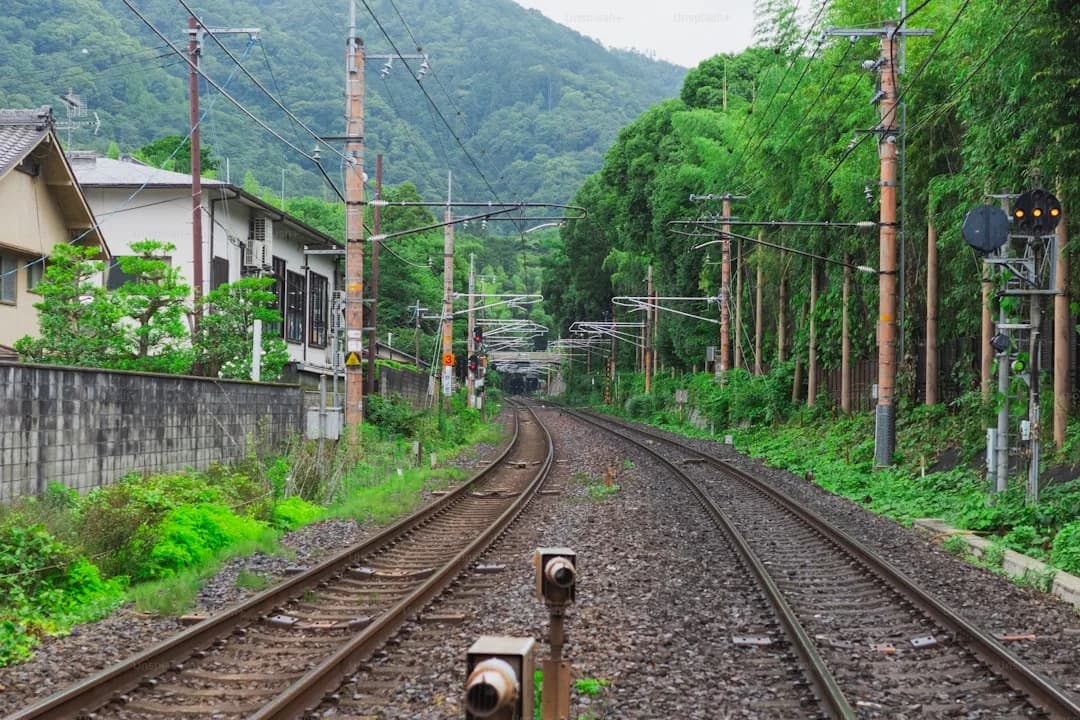
Japan Rail Pass 2026: Complete Guide to JR Pass
The Japan Rail Pass (commonly called the JR Pass) is the single most discussed item in any Japan travel planning conversation -- and for good reason. This pass can save you hundreds of dollars on train travel if you are visiting multiple cities, or it can be a waste of money if your itinerary does not justify the cost. This guide covers current pricing, what the pass does and does not cover, how to buy and activate it, regional alternatives, and a straightforward framework for deciding whether the JR Pass is worth it for your trip.
What Is the Japan Rail Pass?
The JR Pass is an unlimited travel pass for the nationwide network of trains operated by the Japan Railways (JR) Group. Japan's rail network is operated by six regional JR companies (JR East, JR West, JR Central, JR Hokkaido, JR Shikoku, and JR Kyushu) plus JR Freight. The nationwide JR Pass covers all six passenger companies.
The pass is available exclusively to foreign tourists visiting Japan on a temporary visitor visa. Japanese nationals living abroad may also qualify under certain conditions.
Types and Prices (2026)
The JR Pass comes in two classes and three durations:
Ordinary (Standard) Class
| Duration | Adult Price | Child Price (6-11) |
|---|---|---|
| 7 days | Y50,000 ($333) | Y25,000 ($167) |
| 14 days | Y80,000 ($533) | Y40,000 ($267) |
| 21 days | Y100,000 ($667) | Y50,000 ($333) |
Green Car (First Class)
| Duration | Adult Price | Child Price (6-11) |
|---|---|---|
| 7 days | Y70,000 ($467) | Y35,000 ($233) |
| 14 days | Y110,000 ($733) | Y55,000 ($367) |
| 21 days | Y140,000 ($933) | Y70,000 ($467) |
Children under 6 travel free when accompanied by a pass holder. Prices shown are as of early 2026 and are subject to change.
Note: In October 2023, JR raised the pass price significantly (the 7-day Ordinary pass went from Y29,650 to Y50,000). Even at the higher price, the pass remains excellent value for multi-city itineraries -- but it is no longer the automatic purchase it once was.
Is the JR Pass Worth It?
The math is straightforward. Compare the cost of individual train tickets for your planned routes against the pass price.
Common Route Prices (One Way, Reserved Seat, 2026)
| Route | Shinkansen | Time |
|---|---|---|
| Tokyo - Kyoto | Y13,970 | 2h 15m |
| Tokyo - Osaka | Y14,520 | 2h 30m |
| Tokyo - Hiroshima | Y19,760 | 3h 50m |
| Tokyo - Kanazawa | Y14,380 | 2h 30m |
| Tokyo - Sendai | Y11,410 | 1h 35m |
| Kyoto - Hiroshima | Y12,220 | 1h 40m |
| Osaka - Hiroshima | Y10,880 | 1h 25m |
| Tokyo - Nagano | Y8,340 | 1h 20m |
| Tokyo - Hakone (Odawara) | Y3,280 | 35m |
Example: Classic 7-Day Itinerary
A typical Tokyo-Hakone-Kyoto-Nara-Osaka-Hiroshima route:
| Leg | Cost |
|---|---|
| Tokyo - Odawara (Hakone) | Y3,280 |
| Odawara - Kyoto | Y11,420 |
| Kyoto - Nara (JR Nara Line) | Y720 |
| Nara - Kyoto | Y720 |
| Kyoto - Hiroshima | Y12,220 |
| Hiroshima - Osaka | Y10,880 |
| Osaka - Tokyo | Y14,520 |
| Total | Y53,760 ($358) |
The 7-day pass at Y50,000 saves Y3,760 on Shinkansen alone, plus you get unlimited local JR trains within cities (JR Yamanote Line in Tokyo, JR lines in Osaka and Kyoto) and JR buses. The value adds up quickly.
When the JR Pass Is NOT Worth It
- You are only traveling between Tokyo and Kyoto/Osaka (round trip = Y27,940-29,040; cheaper than the Y50,000 pass)
- You are staying in one city and only taking local trains
- You are primarily traveling in Hokkaido or Kyushu (regional passes offer better value)
- Your travel dates are spread across more than 7 days but you only take 2-3 long-distance trains
What the JR Pass Covers
Included
- All Shinkansen lines -- Tokaido, Sanyo, Tohoku, Hokkaido, Joetsu, Hokuriku, and Kyushu Shinkansen. Exception: Nozomi and Mizuho trains on the Tokaido/Sanyo Shinkansen are NOT covered (see below).
- All JR conventional/local trains -- This includes the JR Yamanote Line (Tokyo's loop line), JR lines in Osaka, Kyoto, Hiroshima, and all other cities.
- JR buses -- Local JR buses and some highway bus routes (not all).
- JR Ferry to Miyajima -- The ferry from Miyajimaguchi to Miyajima Island (Itsukushima Shrine).
- Narita Express (N'EX) -- Airport train from Narita to Tokyo Station.
NOT Included
- Nozomi and Mizuho Shinkansen -- These are the fastest trains on the Tokaido (Tokyo-Osaka) and Sanyo (Osaka-Hakata) lines. JR Pass holders must take the slightly slower Hikari or Kodama (Tokaido) or Sakura and Kodama (Sanyo) instead. The time difference is typically 15-30 minutes.
- Non-JR private railways -- Kintetsu (Osaka-Nara), Odakyu (Tokyo-Hakone), Hankyu, Keihan, Tokyo Metro, and many others.
- Tokyo Metro and Toei Subway -- These are separate from JR.
- JR Kyushu's luxury sightseeing trains -- Some require supplementary fees.
Pro tip: The Nozomi restriction is the most common surprise for JR Pass users. On the Tokyo-Kyoto route, the Hikari train takes 2 hours 40 minutes versus 2 hours 15 minutes for the Nozomi -- not a significant difference. But Hikari trains run less frequently (about 2 per hour versus 6+ for Nozomi), so plan your travel times using Hyperdia or Google Maps.
How to Buy the JR Pass
Option 1: Buy Online (Recommended)
Purchase directly from the official JR Pass website or authorized online retailers. You will receive an exchange order (voucher) by email or mail. Exchange it for the actual pass at a JR ticket office (Midori no Madoguchi) at major stations or airports upon arrival in Japan.
Option 2: Buy in Japan
Since 2023, the JR Pass can be purchased at major JR stations and airports in Japan. Prices are the same as online. Available at:
- Narita and Haneda airports
- Tokyo, Shinagawa, Shinjuku, Shibuya, Ikebukuro stations
- Kyoto, Osaka, Shin-Osaka stations
- Other major JR stations nationwide
Activation
When you exchange your voucher or purchase the pass in Japan, you choose your start date. The pass does not have to start on the day of purchase -- you can set it to begin up to 30 days later. Once activated, it runs for consecutive calendar days (7, 14, or 21).
Pro tip: If you are flying into Tokyo and your first Shinkansen trip is not until day 3, consider starting the pass on day 3 and paying for local JR trains on days 1-2 individually. This extends the window your pass covers for later long-distance travel.
How to Use the JR Pass
Seat Reservations
JR Pass holders can reserve seats for free at any JR ticket office or through the green ticket machines (some now support English). Reservations are optional on most trains -- you can also sit in the unreserved cars (jiyuseki, usually cars 1-3 on the Shinkansen).
When to reserve:
- Peak travel periods (Golden Week, Obon, New Year)
- Popular routes on Friday evenings and Sunday afternoons
- Trains with limited unreserved seating (Hayabusa to Hokkaido, Kagayaki to Kanazawa -- these trains require reservations even with a JR Pass)
At the Gate
You cannot use the JR Pass at automatic ticket gates. Walk through the staffed gate (typically on the far left or right of the gate area) and show your pass to the attendant. They will glance at it and wave you through.
Update: Some stations have started installing IC-card-style gates for JR Pass holders, but availability is limited. The staffed gate remains the standard method at most stations.
Regional JR Passes
If your travel is concentrated in one region, a regional pass is often better value than the nationwide pass.
JR East Passes
| Pass | Duration | Price | Coverage |
|---|---|---|---|
| JR East Tohoku Area | 5 days (flexible) | Y30,000 | Tokyo + northern Honshu (Sendai, Aomori, Akita) |
| JR East Nagano/Niigata Area | 5 days (flexible) | Y18,000 | Tokyo + Nagano, Niigata, Gala Yuzawa |
| JR Tokyo Wide Pass | 3 days (consecutive) | Y15,000 | Greater Tokyo area including Karuizawa, Fuji area, Izu |
JR West Passes
| Pass | Duration | Price | Coverage |
|---|---|---|---|
| JR Kansai Area Pass | 1-4 days | Y2,400-5,600 | Osaka, Kyoto, Nara, Kobe, Himeji |
| JR Kansai Wide Area Pass | 5 days | Y12,000 | Kansai + Okayama, Kurashiki, Kinosaki, Amanohashidate |
| JR Sanyo-San'in Area Pass | 7 days | Y23,000 | Osaka to Hakata + San'in coast |
JR Hokkaido Pass
| Pass | Duration | Price |
|---|---|---|
| JR Hokkaido Pass | 5 days (flexible) | Y20,000 |
| JR Hokkaido Pass | 7 days (consecutive) | Y27,000 |
JR Kyushu Pass
| Pass | Duration | Price |
|---|---|---|
| All Kyushu Pass | 3 days | Y16,000 |
| All Kyushu Pass | 5 days | Y18,000 |
| Northern Kyushu Pass | 3 days | Y9,000 |
| Northern Kyushu Pass | 5 days | Y11,000 |
Tips for Maximizing Your JR Pass
1. Front-load your long-distance travel
Structure your itinerary so that your expensive Shinkansen trips fall within the 7-day (or 14-day) pass window. For example, if you have a 10-day trip, use the pass for days 1-7 when you are moving between cities, then spend days 8-10 in one place using local transport.
2. Use JR local lines within cities
The JR Yamanote Line in Tokyo connects major neighborhoods (Shibuya, Shinjuku, Ikebukuro, Ueno, Akihabara, Tokyo Station). With a JR Pass, these rides are free. In Osaka, JR lines reach Osaka Station (Umeda), Tennoji, Namba (via a short walk from JR Namba), and Universal Studios (JR Yumesaki Line).
3. Take advantage of the Narita Express
The Narita Express (N'EX) from Narita Airport to Tokyo Station costs Y3,070 one way. If your pass is active on your arrival day, that is a free ride included.
4. Visit Miyajima for free
The JR Ferry from Miyajimaguchi to Miyajima Island is covered by the pass. The competing Matsudai ferry is not. Both take about 10 minutes, but the JR ferry passes closer to the floating torii gate.
5. Make seat reservations for peace of mind
Reservations are free with the pass, so there is no reason not to. Especially important on Fridays, weekends, and during holidays.
6. Consider overnight trains to save on accommodation
Limited options remain, but the Sunrise Seto/Izumo overnight train from Tokyo to Takamatsu/Izumo runs nightly. The nobi-nobi (carpet) seats are covered by the JR Pass. Private sleeping compartments require an additional fee.
Common Mistakes to Avoid
Buying the pass for a Tokyo-Kyoto-only trip
A Tokyo-Kyoto round trip costs Y27,940 in reserved seats. The 7-day pass is Y50,000. Unless you are adding other JR travel worth at least Y22,000, the pass loses money on this route alone.
Forgetting about the Nozomi restriction
The Nozomi trains are the most frequent on the Tokaido Shinkansen, and it is easy to accidentally board one. If caught without a valid ticket, you will need to pay the full unreserved fare. Always check the train name on departure boards.
Not considering regional passes
A traveler spending 5 days in the Kansai region (Osaka, Kyoto, Nara, Kobe, Himeji) is far better served by the JR Kansai Wide Area Pass (Y12,000) than the nationwide pass (Y50,000).
Assuming all trains are JR
Many urban rail lines are operated by private companies. The Tokyo Metro, Toei Subway, Kintetsu, Odakyu, Keio, Hankyu, Hanshin, and Keihan railways are all separate from JR and not covered by any JR Pass. Check your route in Google Maps -- it shows the operator for each leg.
Starting the pass too early
If you are spending your first two days exploring Tokyo by subway (not JR), do not activate the pass until you need your first JR train. Every day counts.
Key Takeaways
- The 7-day JR Pass costs Y50,000 ($333) and covers most Shinkansen, all JR local trains, some buses, and the Miyajima ferry.
- Nozomi and Mizuho Shinkansen are NOT covered -- use Hikari, Sakura, or Kodama instead.
- The pass pays for itself on most multi-city itineraries (Tokyo + Kyoto + Hiroshima, for example).
- Regional passes (JR East, West, Hokkaido, Kyushu) offer better value for single-region travel.
- Buy online or at major JR stations in Japan. Activate on the day you need it, not necessarily arrival day.
- Seat reservations are free and recommended for peak periods.
- Do the math for your specific itinerary before buying -- the pass is not always the cheapest option.
Frequently Asked Questions
Can I use the JR Pass on the Nozomi Shinkansen?
No. The Nozomi and Mizuho are the only Shinkansen trains excluded from the JR Pass. On the Tokyo-Osaka route, take the Hikari instead (roughly 30 minutes slower, runs every 30-60 minutes). On the Osaka-Hakata route, take the Sakura. The time difference is minor and the comfort level is identical.
Can I buy the JR Pass for just 1 or 2 days?
No. The minimum duration is 7 consecutive days. For shorter trips, look at regional passes -- the JR Kansai Area Pass starts at 1 day (Y2,400), and the JR Tokyo Wide Pass is 3 days (Y15,000).
Do I need to reserve seats in advance?
For most trains, no. You can sit in unreserved cars without a reservation. However, the Hayabusa (Tokyo-Hokkaido), Kagayaki (Tokyo-Kanazawa), and some other trains require reservations even for pass holders. During peak periods (Golden Week, Obon, year-end), reserving seats on all long-distance trains is strongly recommended.
Can I use the JR Pass on the Tokyo Metro?
No. The Tokyo Metro and Toei Subway are completely separate from JR. In Tokyo, the JR Pass covers JR lines only (Yamanote Line, Chuo Line, Sobu Line, etc.). For the subway, use a Suica/PASMO IC card or buy a Tokyo Subway Ticket (24-72 hour unlimited pass from Y800-1,500).
Is the Green Car (first class) pass worth the upgrade?
The Green Car offers wider seats, more legroom, and a quieter cabin. On Shinkansen, the difference is noticeable but not dramatic -- standard class is already very comfortable. The Green Car pass costs Y20,000 more than the Ordinary pass for 7 days. It is a nice luxury but not essential. The main practical benefit is guaranteed seating during peak periods, as Green Cars are less crowded.
What happens if I lose my JR Pass?
Lost JR Passes cannot be replaced or refunded. Treat it like cash. Some travelers photograph their pass as a backup record, but the physical pass is required for travel. Keep it in a secure pocket or pouch.
Sources & References
This article is based on first-hand experience and verified with the following official sources:
Go2Japan Team
Exploring Japan since 2021 | 35+ prefectures visited | Updated monthly
We are a team of travel writers and Japan enthusiasts who explore the country year-round. Our guides are based on first-hand experience, local knowledge, and verified official sources.
More about us →People Also Read
Best Time to Visit Japan: Season-by-Season Guide
Find the best time to visit Japan with our season-by-season guide. Cherry blossoms, autumn foliage, summer festivals, and winter snow -- month-by-month breakdown.
Japan Travel Guide 2026: Everything You Need to Know
Complete Japan travel guide for 2026. Covers visas, budget, transport, culture, and practical tips for first-time visitors planning a trip to Japan.

Japan Visa Guide 2026: Requirements, eVisa & Entry Rules
Complete Japan visa guide for 2026. Visa-free countries, eVisa process, required documents, Visit Japan Web registration, and entry rules for tourists.
Japanese Food Guide: 20 Dishes Every Traveler Must Try
Guide to 20 must-try Japanese dishes for travelers. From sushi and ramen to regional specialties -- what to eat, where to find it, and how to order.
Plan Your Japan Trip
Book hotels, transport, activities, and get connected with an eSIM
Some links are affiliate links. We may earn a commission at no extra cost to you.