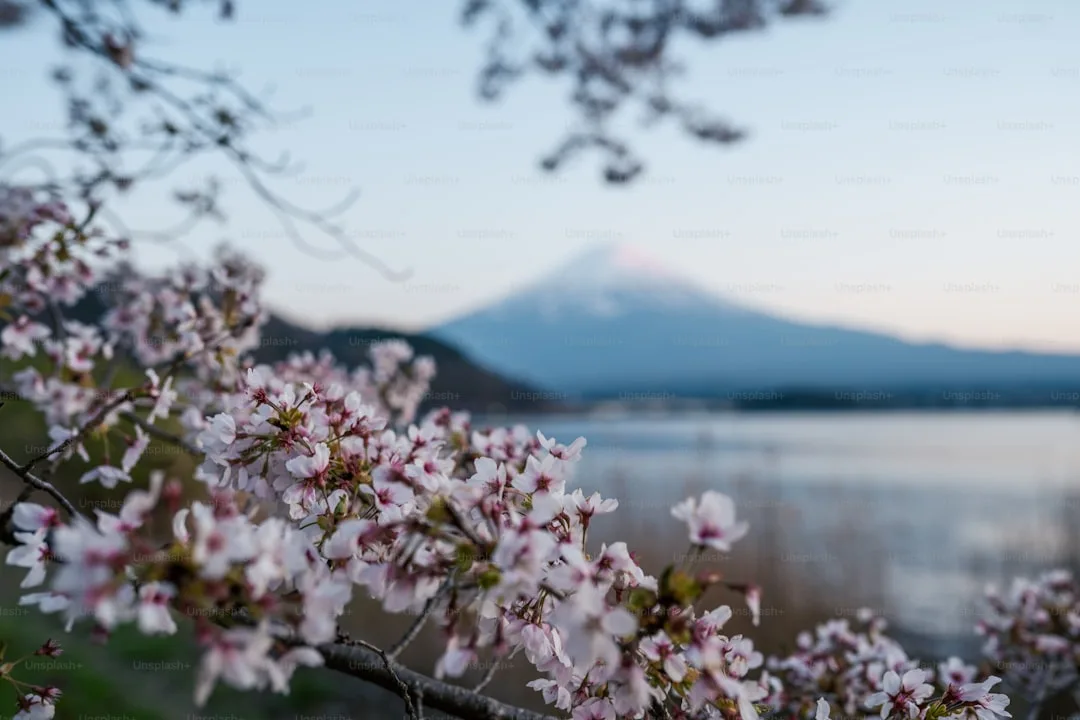
Japan Travel Guide 2026: Everything You Need to Know
Japan is a country that manages to be simultaneously ancient and futuristic, chaotic and meticulously organized, familiar from pop culture and yet completely surprising once you arrive. From the neon-lit streets of Tokyo to the thousand-year-old temples of Kyoto, from snow-covered peaks in Hokkaido to subtropical beaches in Okinawa, Japan offers a travel experience unlike anywhere else. This guide covers everything you need to plan a trip in 2026 -- visas, budget, transport, culture, and the practical details that make the difference between a good trip and a great one.
Entry Requirements and Visas
Japan offers visa-free entry to citizens of 71 countries and regions, including the United States, Canada, the United Kingdom, Australia, and most EU nations. The standard visa-free stay is 90 days for most Western passport holders.
Visit Japan Web
All visitors must register on Visit Japan Web before arrival. This online platform handles:
- Immigration (arrival card)
- Customs declaration
- Tax-free shopping QR code (optional but useful)
Complete your registration at least 3 days before departure. You will receive QR codes to scan at immigration, which significantly speeds up the entry process.
eVisa
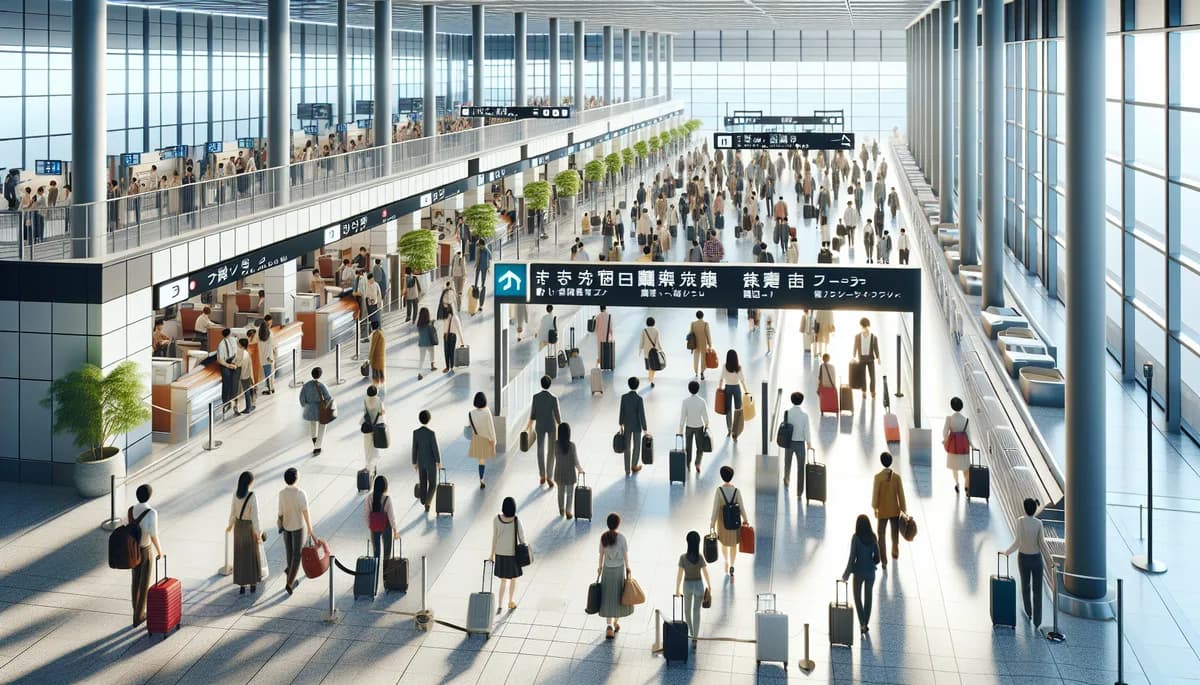
For nationalities that require a visa, Japan's eVisa system is available for citizens of certain countries. The process takes 5-7 business days and costs no fee for the standard tourist visa. Check the Ministry of Foreign Affairs website for the latest country-specific requirements.
For a detailed breakdown of the visa process, see our Japan Visa Guide 2026.
Pro tip: Your passport must be valid for the duration of your stay. Japan does not require 6 months of remaining validity like many other Asian countries, but airlines may enforce their own rules -- check with your carrier before flying.
Best Time to Visit
Japan has four distinct seasons, and each one has a strong case for being the "best" time to visit. Your choice depends on what you want to experience.
Cherry Blossom Season (Late March - Mid April)
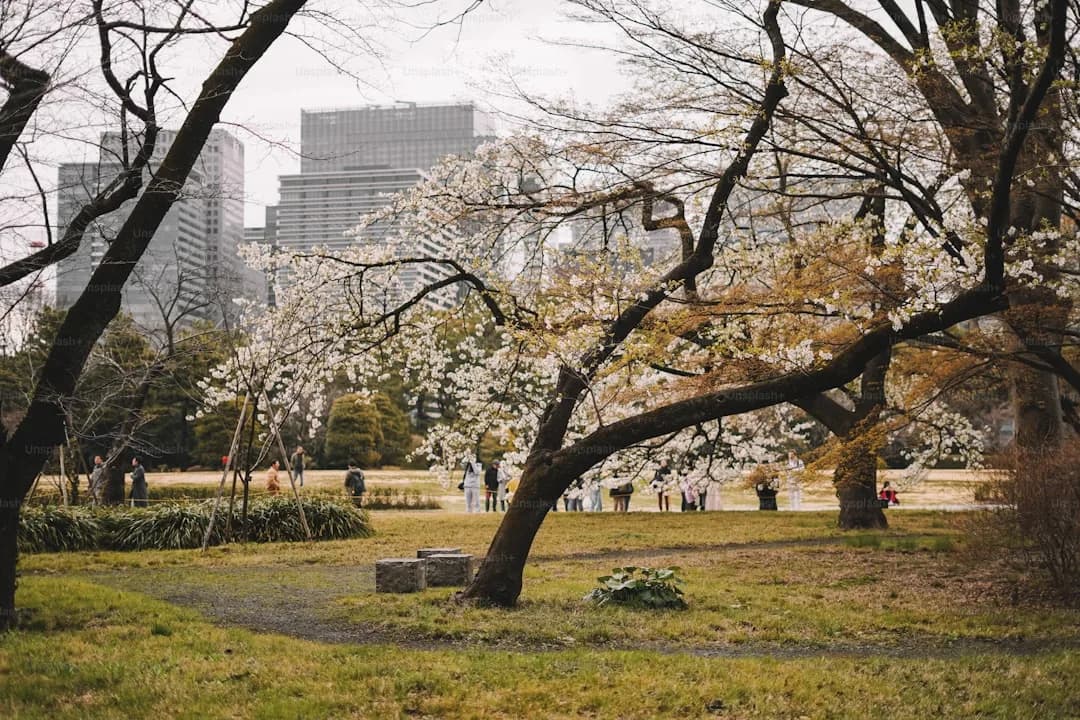
The most popular time to visit. Cherry blossoms (sakura) sweep northward from late March in Kyoto and Tokyo to late April in northern Honshu and early May in Hokkaido. Expect peak crowds and peak hotel prices -- book accommodation 3-6 months ahead.
Summer (June - August)
June brings the rainy season (tsuyu) to most of Japan, with humid conditions lasting 3-4 weeks. July and August are hot and humid (30-35C in Tokyo) but are prime festival season. Major events include Gion Matsuri in Kyoto (July), Tenjin Matsuri in Osaka (July), and Nebuta Matsuri in Aomori (August). Hokkaido stays pleasant in summer.
Autumn Foliage (October - November)
Arguably the best balance of weather, scenery, and crowd levels. Temperatures are comfortable (15-22C), skies are clear, and the fall colors (koyo) are extraordinary. Peak foliage hits Tokyo and Kyoto in mid-to-late November.
Winter (December - February)
Cold but rewarding. Ski season runs from December through March in Hokkaido and the Japan Alps. Hot spring (onsen) towns are at their atmospheric best. Winter illuminations light up cities nationwide. Fewer tourists outside of ski resorts.
For a month-by-month breakdown with weather data, see our Best Time to Visit Japan guide.
Money and Budget
Japan uses the Japanese yen (JPY / Y). As of early 2026, the exchange rate hovers around Y150 = $1 USD, making Japan more affordable than it was a decade ago.
Cash and Cards
Japan has historically been a cash-heavy society, but credit card acceptance has improved dramatically since 2023. Visa and Mastercard are widely accepted at convenience stores, chain restaurants, department stores, and most tourist-oriented businesses. That said, you still need cash for:
- Small ramen shops and independent restaurants
- Temples and shrine admission fees
- Some rural ryokan and minshuku
- Vending machines (though many now take IC cards)
- Market stalls and street food vendors
ATMs: 7-Eleven ATMs (found inside every 7-Eleven convenience store) and Japan Post Bank ATMs accept international cards 24/7. Withdraw in larger amounts to minimize fees.
Daily Budget Ranges
| Traveler Type | Per Day (JPY) | Per Day (USD) |
|---|---|---|
| Budget | Y8,000-12,000 | $53-80 |
| Mid-range | Y15,000-25,000 | $100-167 |
| Comfort | Y30,000-50,000+ | $200-333+ |
Budget travelers can get by on Y8,000/day by staying in hostels (Y3,000-4,000/night), eating at convenience stores and cheap ramen joints (Y300-800/meal), and using a Japan Rail Pass for transport. For a detailed budget breakdown, see our Tokyo Budget Guide.
Getting Around
Japan's transport system is world-class -- fast, clean, punctual, and comprehensive. Here are your main options.
Japan Rail Pass (JR Pass)
The JR Pass is the single best value in Japanese travel if you plan to take the Shinkansen (bullet train) between multiple cities. A 7-day pass costs Y50,000 ($333) and covers unlimited travel on most JR trains, including most Shinkansen lines.
A single Tokyo-Kyoto round trip on the Shinkansen costs Y27,000+, so the pass pays for itself quickly. See our complete Japan Rail Pass Guide for pricing, tips, and how to decide if it is worth it for your itinerary.
IC Cards (Suica / Pasmo / ICOCA)
Rechargeable smart cards that work on local trains, buses, and subways in all major cities. Tap on, tap off. You can also use them at convenience stores, vending machines, and many restaurants. Get a Suica card at any JR station in the Tokyo area, or use the Suica app on a compatible iPhone or Apple Watch.
Note: Physical IC cards have been in limited supply since 2023. The mobile Suica app on iPhone is the most reliable option. Android users in Japan can use mobile PASMO.
Domestic Flights
Japan's domestic carriers (ANA, JAL, Peach Aviation, Jetstar Japan) connect major cities in 1-2 hours. Tokyo to Sapporo or Tokyo to Okinawa are routes where flying makes more sense than the train. Budget carriers offer fares from Y5,000-10,000 ($33-67) when booked in advance.
Buses
Highway buses are the budget option for long-distance travel. An overnight bus from Tokyo to Osaka costs Y3,000-6,000 ($20-40), compared to Y14,000 for the Shinkansen. Willer Express and JR Bus are the main operators. Comfort varies -- spring for the 3-row seat configuration if you can.
Accommodation
Japan offers lodging options you will not find anywhere else in the world.
Hotels
Standard international and domestic hotel chains are everywhere. Expect to pay Y8,000-15,000 ($53-100) for a mid-range business hotel with small but immaculate rooms. Toyoko Inn, Dormy Inn, and APA Hotels are reliable budget chains.
Ryokan (Traditional Inns)
A stay at a traditional ryokan is one of Japan's essential experiences. Tatami mat rooms, futon bedding, communal or private onsen baths, and elaborate multi-course kaiseki dinners. Budget ryokan start around Y8,000/person. High-end ryokan in places like Hakone or Kinosaki Onsen run Y30,000-80,000/person including meals.
Hostels
Clean, well-run hostels in major cities charge Y2,500-4,500 ($17-30) per night for a dorm bed. Many include shared kitchens, lounges, and helpful English-speaking staff. Booking.com and HostelWorld have the widest selection.
Capsule Hotels
A uniquely Japanese experience. A private sleeping pod with a curtain or door, shared bathrooms, and often an onsen-style bath. From Y3,000-5,000 ($20-33) per night. Nine Hours, First Cabin, and Capsule Value Kanda are popular chains.
Food
Japanese food is reason enough to visit the country. The range and quality at every price point is extraordinary.
Must-Try Dishes
- Ramen -- Regional styles vary enormously. Tonkotsu in Fukuoka, miso in Sapporo, shoyu in Tokyo. Y800-1,200 per bowl.
- Sushi -- Conveyor belt (kaiten) sushi from Y100/plate, standing sushi bars from Y1,500, or omakase experiences from Y10,000-30,000.
- Tempura -- Light, crispy battered vegetables and seafood. Y1,000-2,000 at casual spots.
- Tonkatsu -- Breaded deep-fried pork cutlet. Y1,000-1,500 at specialists like Maisen in Tokyo.
- Okonomiyaki -- Savory pancake, either Osaka-style (mixed) or Hiroshima-style (layered). Y800-1,200.
For a comprehensive list, see our Japanese Food Guide.
Convenience Store Food
Do not underestimate konbini (convenience store) food. 7-Eleven, Lawson, and FamilyMart serve onigiri (rice balls, Y120-200), bento boxes (Y400-600), sandwiches, and surprisingly excellent prepared meals. A full konbini meal costs Y500-800 ($3-5).
Etiquette
- Slurping noodles is not rude -- it is expected and shows appreciation
- Most ramen shops use ticket vending machines at the entrance
- Tipping is not practiced and can cause confusion
- Saying "itadakimasu" before eating and "gochisosama" after is polite
Cultural Etiquette
Understanding a few cultural norms will dramatically improve your experience.
Shoes
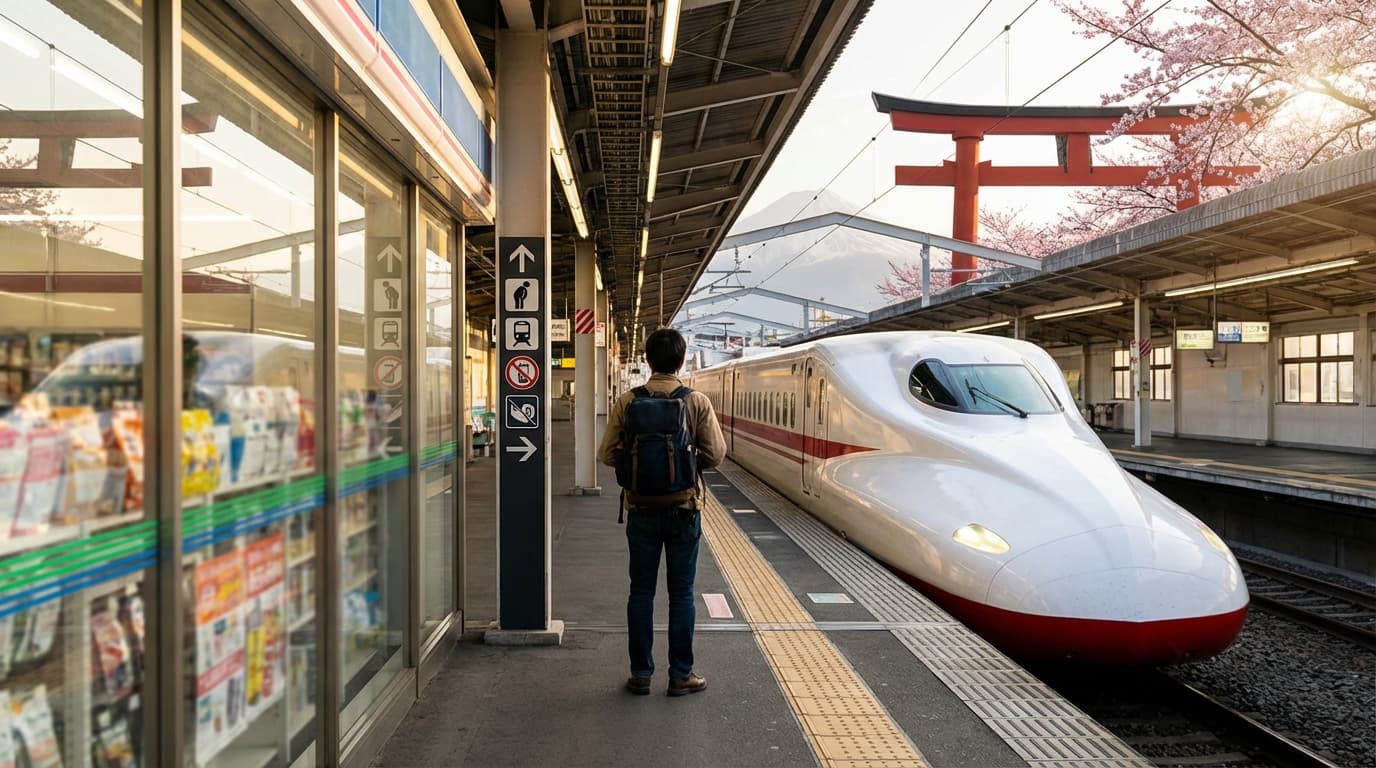
Remove your shoes when entering homes, ryokan, some restaurants, fitting rooms, and temple interiors. Slip-on shoes make life easier. Indoor slippers are provided in ryokan -- and there are often separate toilet slippers for the bathroom.
Trains and Public Spaces
- Talking on the phone on trains is considered very rude. Set your phone to manner mode (silent).
- Eating on local trains is frowned upon. Long-distance Shinkansen trains are the exception -- ekiben (train station bento) are a travel tradition.
- Stand on the left side of escalators in Tokyo (right side in Osaka).
Temples and Shrines
- Bow slightly before passing through a torii gate at shrines
- Wash your hands at the temizuya (water basin) before entering
- Do not walk down the center of shrine paths -- that space is reserved for the gods
- Photography is usually fine outdoors but often prohibited inside temple halls
For more on temple visiting, see our Kyoto Temple Guide.
Bowing
Bowing is part of daily life. A slight nod (about 15 degrees) works for casual greetings and thank-yous. You do not need to master formal bowing -- the gesture of respect is what matters.
Must-Have Apps
Download these before you land:
- Google Maps -- Works excellently in Japan with accurate transit directions. Download offline maps for your regions.
- Suica / PASMO app -- Mobile IC card for all local transport (iPhone only for international visitors).
- Google Translate -- Download the Japanese language pack for offline camera translation. Essential for reading menus and signs.
- Navitime for Japan Travel -- Better than Google Maps for some transit routes, especially bus information.
- PayPay -- Japan's most popular mobile payment app. Useful where credit cards are not accepted.
- Tabelog -- Japan's top restaurant review site. The app has partial English support and is far more trusted locally than Google reviews.
Connectivity
SIM Cards and eSIM
The easiest option is an eSIM purchased before departure. Ubigi, Airalo, and Mobal offer Japan eSIM plans starting from Y1,500-3,000 ($10-20) for 7-14 days with 3-10 GB of data. Physical SIM cards and pocket WiFi routers can be rented at airports (Narita, Haneda, Kansai) from Y500/day.
Pro tip: Japan's free WiFi network has improved but is still unreliable. Having your own data connection is strongly recommended.
Language
English proficiency varies widely. Staff at hotels, major train stations, and tourist sites usually speak some English. Outside of tourist areas, English is limited. The language barrier is real but manageable with Google Translate and a willingness to use gestures and pointing.
Useful Japanese Phrases
- Sumimasen -- Excuse me / I am sorry (the most useful word in Japan)
- Arigatou gozaimasu -- Thank you very much
- Eigo menu arimasu ka? -- Do you have an English menu?
- Kore kudasai -- This one please (while pointing)
- Ikura desu ka? -- How much is this?
- Oishii -- Delicious
Suggested Itineraries
7 Days: The Classic Route
- Days 1-3: Tokyo -- Shibuya, Shinjuku, Asakusa, Akihabara, Tsukiji
- Day 4: Day trip to Kamakura or Nikko
- Days 5-6: Kyoto -- Temples, Fushimi Inari, Arashiyama, geisha district
- Day 7: Osaka -- Dotonbori, street food, Osaka Castle
14 Days: Deep Dive
Add Hiroshima and Miyajima Island, Hakone or the Japan Alps, Nara's deer park, and Kanazawa's gardens to the 7-day route. A 14-day JR Pass makes this cost-effective and logistically smooth.
21 Days: The Grand Tour
Extend further with Hokkaido (Sapporo, Furano, Niseko), the art islands of Naoshima, Koyasan's temple lodging, and the rural beauty of the Kii Peninsula.
Key Takeaways
- Visa: Most Western passport holders get 90 days visa-free. Register on Visit Japan Web before arrival.
- Budget: Japan is more affordable than its reputation suggests. Y8,000-12,000/day is achievable on a tight budget.
- Transport: The JR Pass is excellent value for multi-city trips. IC cards handle local transit.
- Cash: Carry yen despite improving card acceptance. 7-Eleven ATMs are your best friend.
- Culture: Remove shoes indoors, do not tip, keep quiet on trains, and learn a few Japanese phrases.
- Food: Eat everything. Convenience store food alone is a culinary experience.
- Timing: Cherry blossom season (late March - April) and autumn foliage (October - November) are peak but worth the crowds.
Frequently Asked Questions
Is Japan expensive to visit?
Japan's reputation as prohibitively expensive is outdated. With the yen at around Y150 to the dollar, budget travelers can manage on $53-80/day. Mid-range travelers spending $100-167/day will eat extremely well and stay comfortably. The key savings come from konbini food, efficient public transport, and the wide range of affordable accommodation from hostels to capsule hotels.
Do I need to speak Japanese?
No, but a few phrases go a long way. Major tourist infrastructure has English signage and staff. Google Translate's camera function handles menus and signs. Outside of tourist areas, communication requires more creativity, but Japanese people are generally patient and helpful.
Is Japan safe?
Japan is one of the safest countries in the world for travelers. Violent crime is extremely rare, and petty crime rates are low. You can walk alone at night in virtually any neighborhood. Lost items are routinely turned in and can be collected from train station lost-and-found offices. The biggest safety concerns are natural disasters (earthquakes, typhoons) -- download a disaster alert app like Safety Tips.
How far in advance should I book?
For cherry blossom season or autumn foliage in Kyoto, book accommodation 3-6 months ahead. For other seasons, 1-2 months is usually sufficient. JR Passes can be purchased up to the day of use, but buying in advance is recommended to lock in pricing. Popular restaurants with limited seating (especially high-end sushi) may need reservations 1-3 months ahead.
Can I use my credit card everywhere?
Not everywhere. Credit card acceptance has improved significantly, but small restaurants, rural areas, temples, and some traditional businesses remain cash-only. Carry at least Y10,000-20,000 in cash at all times. Visa and Mastercard have the widest acceptance; American Express is less common.
What is the best way to get from the airport to the city?
From Narita Airport to Tokyo: the Narita Express (N'EX) takes about 60 minutes to Tokyo Station (Y3,070). The budget option is the Access Express / Keisei line to Asakusa or Ueno (Y1,270, 50-70 minutes). From Haneda Airport: the monorail (Y500, 13 minutes to Hamamatsucho) or Keikyu line (Y300-500) are fastest. From Kansai Airport to Osaka: the Haruka Express reaches Shin-Osaka in 50 minutes (Y2,380).
Sources & References
This article is based on first-hand experience and verified with the following official sources:
Go2Japan Team
Exploring Japan since 2021 | 35+ prefectures visited | Updated monthly
We are a team of travel writers and Japan enthusiasts who explore the country year-round. Our guides are based on first-hand experience, local knowledge, and verified official sources.
More about us →People Also Read
Best Time to Visit Japan: Season-by-Season Guide
Find the best time to visit Japan with our season-by-season guide. Cherry blossoms, autumn foliage, summer festivals, and winter snow -- month-by-month breakdown.
Japan Visa Guide 2026: Requirements, eVisa & Entry Rules
Complete Japan visa guide for 2026. Visa-free countries, eVisa process, required documents, Visit Japan Web registration, and entry rules for tourists.
Japanese Etiquette Guide: Do's and Don'ts for Visitors
Master Japanese etiquette with our comprehensive guide. Learn essential do's and don'ts for temples, restaurants, trains, and public spaces.
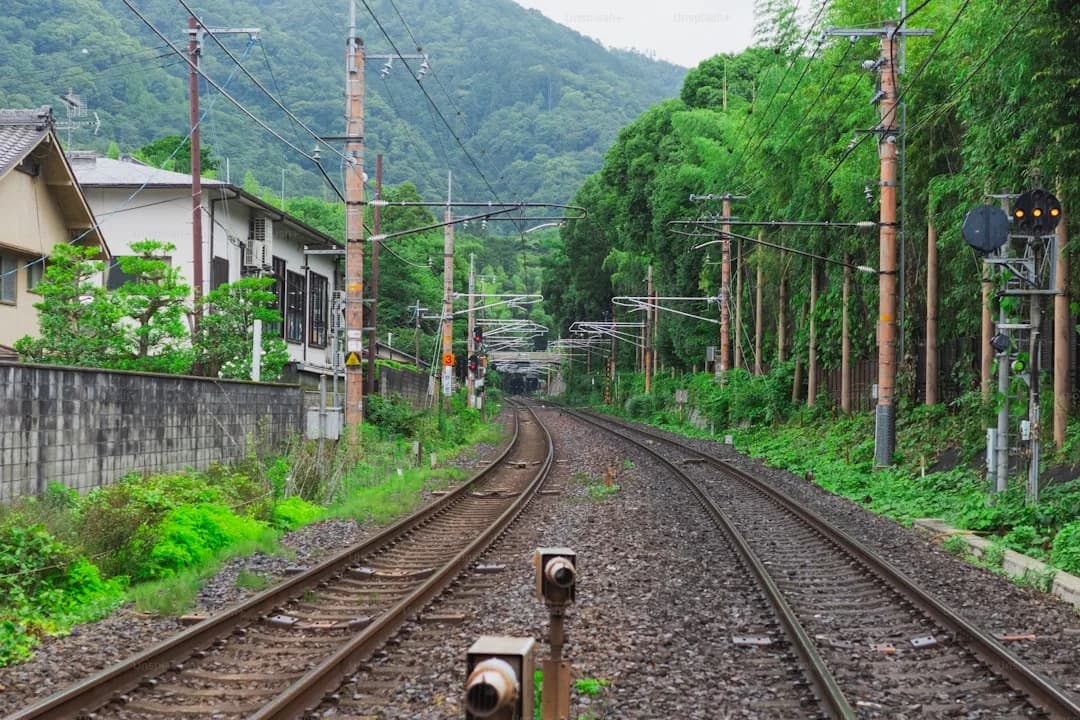
Japan Rail Pass 2026: Complete Guide to JR Pass
Complete 2026 guide to the Japan Rail Pass. Current prices, how to buy and activate, which trains are covered, and tips to maximize your JR Pass value.
Plan Your Japan Trip
Book hotels, transport, activities, and get connected with an eSIM
Some links are affiliate links. We may earn a commission at no extra cost to you.